


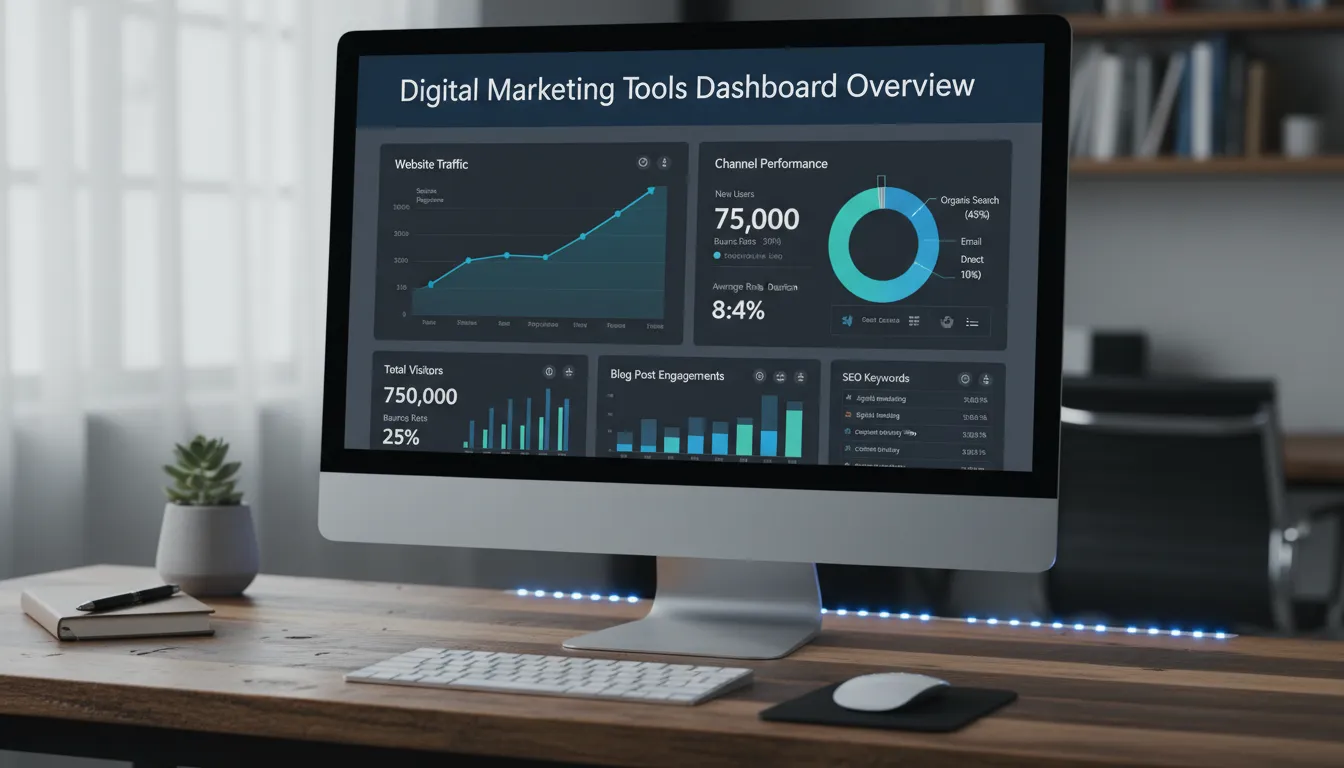
This comprehensive guide explores the top marketing platforms, detailing how they function to elevate your brand. You will learn actionable strategies, discover essential software categories, review detailed comparison tables, and understand how to build a unified technology stack for measurable success.
Are you wondering exactly what are digital marketing tools and how they drive growth? These powerful software solutions streamline campaigns and maximize your online reach.
Understanding What Are Digital Marketing Tools
To build a thriving online presence, you must first understand what are digital marketing tools and how they integrate into your daily operations. These applications help you execute, manage, and measure your promotional efforts across various online channels. From scheduling social media posts to analyzing website traffic, these platforms eliminate manual tasks and provide data-driven insights.
When you invest in the right software, you empower your team to focus on creativity and strategy. Marketing technology allows you to automate repetitive workflows, segment your audience, and deliver personalized messages at the perfect moment. As your business grows, these platforms scale with you, ensuring your campaigns remain efficient and highly targeted.
The Core Functions of Marketing Software
Marketing applications serve several primary functions. First, they facilitate audience discovery by highlighting where your potential customers spend their time online. Second, they enable content distribution, ensuring your articles, videos, and advertisements reach the right people. Third, they provide robust analytics, showing you exactly how users interact with your brand.
By leveraging these core functions, you can align your efforts with your overarching Content Marketing Strategy. You stop guessing and start making decisions based on hard data. This transition from intuition to data-backed strategy marks the difference between stagnant businesses and rapidly growing industry leaders.
Essential Categories of Digital Marketing Software

Navigating the vast landscape of marketing technology requires breaking down the tools into logical categories. Each category addresses a specific channel or tactic within your broader promotional plan.
Social Media Management Platforms
Managing multiple social profiles manually takes hours of valuable time. Social media management platforms allow you to connect all your accounts into a single dashboard. You can draft posts, attach media, and schedule them to publish weeks in advance.
These applications also offer social listening capabilities. This means you can track brand mentions, monitor competitor activity, and identify trending hashtags within your niche. By centralizing your Social Media Management, you maintain a consistent posting cadence and respond to customer inquiries promptly.
Search Engine Optimization (SEO) Software
If you want your website to rank on the first page of Google, you need dedicated SEO software. These platforms help you uncover the specific words and phrases your target audience types into search engines. They analyze your competitors’ websites to reveal their top-performing pages and backlink profiles.
Furthermore, SEO applications crawl your website to identify technical errors, broken links, and missing meta tags. They offer actionable recommendations to improve your site structure, ensuring search engine bots can easily index your content. Mastering SEO Best Practices with these tools guarantees a steady stream of organic traffic over time.
Email Marketing and Automation
Email remains one of the highest-converting channels available to businesses. Email marketing platforms allow you to design beautiful newsletters, segment your subscriber lists, and automate your communications. You can set up trigger-based sequences, sending specific messages when a user abandons their cart, downloads a guide, or celebrates a birthday.
These tools also provide detailed metrics on open rates, click-through rates, and conversions. By analyzing this data, you can refine your subject lines and test different calls-to-action. Running effective Email Marketing Campaigns ensures you nurture leads effectively and guide them smoothly through the sales funnel. For advanced email techniques, you can explore guides from authoritative platforms like Mailchimp.
Content Creation and Design Utilities
Visual appeal plays a massive role in capturing audience attention. Content creation utilities empower marketers to design professional graphics, edit videos, and format documents without needing an advanced degree in graphic design. They provide pre-built templates, stock photo libraries, and intuitive drag-and-drop interfaces.
Whether you need an infographic for a blog post or an engaging video for Instagram, these design applications speed up the production process. High-quality visuals increase engagement rates and make your brand look more trustworthy and polished.
Analytics and Data Reporting
You cannot improve what you do not measure. Analytics platforms track user behavior across your digital properties. They show you where your traffic originates, how long visitors stay on your site, and which pages generate the most revenue.
Reporting tools take this raw data and transform it into visually appealing dashboards. You can easily share these reports with stakeholders to demonstrate the return on investment (ROI) of your campaigns. Platforms like Google Analytics serve as the foundation for understanding your audience’s journey from initial click to final purchase.
Top Tools by Category
Choosing the right software depends on your specific needs, budget, and team size. Below is a structured comparison table outlining popular applications across key categories.
|
Software Category |
Primary Function |
Ideal User |
Key Benefit |
|---|---|---|---|
|
Social Media |
Scheduling and monitoring |
Community managers |
Centralized dashboard for all channels |
|
SEO |
Keyword research and site audits |
Content marketers |
Increased organic search visibility |
|
Email Marketing |
Automation and list management |
Campaign managers |
High ROI through personalized outreach |
|
Analytics |
Traffic tracking and reporting |
Data analysts |
Deep insights into user behavior |
|
Content Creation |
Graphic design and video editing |
Creators |
Professional visuals without heavy training |
How Do These Platforms Work Together?

No single platform does everything perfectly. To achieve maximum results, you must integrate multiple applications into a cohesive system. When your tools communicate with one another, data flows seamlessly across your organization, creating a unified view of the customer.
For example, your advertising platform might generate a new lead. That lead automatically syncs to your email marketing software, which triggers a welcome sequence. If the lead clicks a link in the email, your analytics dashboard records the interaction, and your CRM alerts your sales team. This interconnected approach eliminates data silos and creates a frictionless experience for your audience.
Building an Integrated Tech Stack
Building a solid tech stack starts with identifying your core objectives. If your primary goal involves lead generation, prioritize a robust customer relationship management (CRM) system and reliable landing page builders. If you focus on brand awareness, prioritize social media and content creation software.
Ensure that the applications you select offer native integrations or support connections through third-party automation tools. Seamless integration saves your team from manually downloading and uploading CSV files, reducing human error and freeing up time for strategic thinking. Exploring integration ecosystems on platforms like HubSpot can help you visualize how different systems connect.
Common Mistakes to Avoid When Choosing Software
Many businesses waste time and money by selecting the wrong technology. Avoid these common pitfalls to ensure you get the best return on your software investment:
- Buying based on hype: Just because a tool is popular does not mean it fits your specific business model. Evaluate your unique needs before purchasing.
- Ignoring the learning curve: Powerful software often comes with a steep learning curve. Ensure your team has the time and resources to master the new platform.
- Failing to integrate: Operating tools in isolation leads to fragmented data. Always prioritize platforms that integrate easily with your existing stack.
- Overlooking customer support: When technical issues arise, you need responsive support. Read reviews regarding the vendor’s customer service before committing.
- Paying for unused features: Many platforms offer tiered pricing. Start with a basic plan and upgrade only when you truly need advanced functionalities.
Expert Insights and Pro Tips for Success
To truly maximize the value of your marketing technology, consider these expert insights:
Start small and scale: Do not attempt to implement ten new platforms simultaneously. Start with one or two core applications, master them completely, and then introduce additional tools as your strategy matures.
Audit your stack regularly: Technology evolves rapidly. Conduct an annual review of your software subscriptions. Cancel tools you no longer use and explore new applications that might offer better features or more competitive pricing.
Train your team continuously: A tool only delivers value if your team knows how to use it. Invest in regular training sessions, encourage employees to earn platform certifications, and maintain internal documentation outlining your specific workflows. For deep insights on marketing strategies, authoritative industry resources like Search Engine Land offer excellent daily updates.
Scaling Your Business with the Right Technology
As your business expands, your marketing operations become more complex. You launch more campaigns, target broader audiences, and manage larger budgets. The technology you choose must scale alongside your ambitions.
Enterprise-level platforms offer advanced features like predictive analytics, artificial intelligence, and deep personalization. These capabilities allow you to deliver tailored experiences to thousands of users simultaneously. By relying on scalable technology, you maintain high performance and efficiency, regardless of how large your customer base grows.
Measuring ROI and Campaign Performance

Ultimately, you use these platforms to generate revenue. You must track the return on investment for every campaign you launch. Set clear, measurable goals before executing any strategy. Define your key performance indicators (KPIs), such as cost per acquisition, customer lifetime value, and conversion rates.
Use your analytics dashboards to monitor these KPIs closely. If a campaign underperforms, analyze the data to identify the bottleneck. Perhaps your landing page converts poorly, or your ad targeting is too broad. Make data-driven adjustments, test new variables, and continually optimize your approach for better results.
Conclusion
Understanding what are digital marketing tools is the first step toward building a highly profitable online business. By strategically selecting social media, SEO, email, and analytics platforms, you empower your team to launch campaigns that engage and convert. Stop letting manual tasks slow you down. Audit your current software, build an integrated tech stack, and start driving explosive growth today!
FAQs
1: What is the most important digital marketing software for beginners?
For beginners, an all-in-one analytics platform is the most critical starting point. Understanding where your website traffic comes from allows you to make informed decisions before spending money on advertising or advanced automation systems.
2: How much should a small business spend on marketing technology?
Small businesses should allocate roughly 10% to 15% of their total marketing budget to software. Start with free or entry-level tiers and only upgrade when the return on investment justifies the additional monthly expense.
3: Do I need coding experience to use these platforms?
No, the vast majority of modern marketing platforms feature intuitive drag-and-drop interfaces. You do not need coding experience to build landing pages, automate emails, or schedule social media posts effectively.
4: How do SEO tools help my website rank higher?
SEO applications analyze search volume, track keyword difficulty, and audit your website for technical errors. They provide specific recommendations to optimize your content, making it easier for search engines to understand and rank your pages.
5: Can marketing automation replace human employees?
Marketing automation eliminates repetitive, manual tasks, but it cannot replace human creativity and strategic thinking. Automation frees up your team to focus on building relationships and crafting compelling messaging.
6: What is the difference between a CRM and an email marketing platform?
An email marketing platform primarily handles broadcasting messages to lists of subscribers. A Customer Relationship Management (CRM) system tracks individual interactions, sales pipelines, and detailed customer histories across multiple touchpoints.
7: How often should I check my analytics dashboards?
You should monitor high-level metrics weekly to catch any sudden drops in traffic or performance. Conduct a deep, comprehensive review of your analytics monthly to guide your broader strategic decisions.
8: Why is social listening important for my brand?
Social listening allows you to hear what customers say about your brand when they do not tag you directly. This helps you manage your reputation, address customer complaints quickly, and identify emerging industry trends.
9: What features should I look for in a content creation application?
Look for applications that offer a wide variety of customizable templates, access to royalty-free stock assets, easy export options, and collaborative features, so your team can work on designs together.
10: How do I know if a marketing platform is secure?
Always review the vendor’s security documentation before purchasing. Look for platforms that offer two-factor authentication, comply with global data privacy regulations like GDPR, and provide regular data backups.


Leave a Reply