


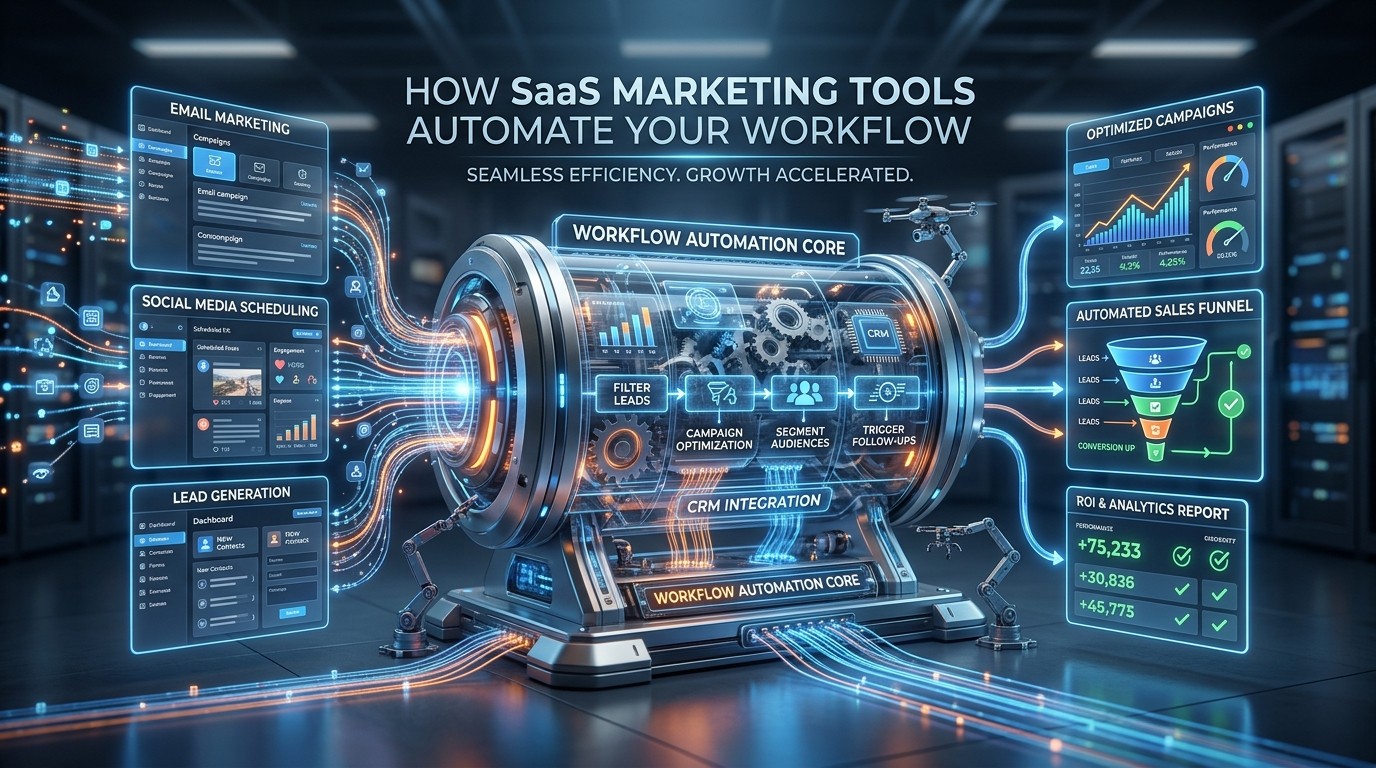
SaaS marketing tools help automate repetitive campaign tasks, improve team coordination, and let marketers spend more time on strategy, personalization, and revenue-driving decisions at scale.
Modern marketing teams move fast, juggle many channels, and constantly respond to changing buyer behavior. That is why these platforms automate the parts of the workflow that slow people down the most. Instead of manually copying data, switching between tabs, or updating the same records in multiple systems, teams can use software to handle those repetitive steps in the background. The result is a cleaner process, faster execution, and fewer mistakes.
The real value of automation is not only speed. It is also psychological relief. When teams know that a system is capturing leads, routing tasks, triggering follow-ups, and updating records automatically, they can focus on higher-value work. SaaS Marketing Tools Automate the routine so humans can focus on message quality, audience insight, and creative planning. That shift improves morale as well as output.
This matters because marketing is no longer a single campaign at a time. It is a network of content, email, social, paid media, referral loops, lifecycle messaging, and analytics. Teams that move quickly also need fewer handoffs, cleaner ownership, and a more dependable way to keep momentum without exhausting everyone involved. SaaS Marketing Tools Automate those moving parts so the workflow becomes more predictable. When the process is predictable, the team can scale without losing control.
Why Workflow Automation Matters
Workflow automation is valuable because it removes friction from everyday tasks. SaaS Marketing Tools Automate lead handling, task creation, reporting updates, and follow-up logic. That means fewer bottlenecks and less reliance on someone remembering to manually complete a step. In a busy environment, that reliability is worth a lot.
SaaS Marketing Tools Automate not just the action itself but the handoff between actions. One of the biggest sources of inefficiency in marketing is the gap between “something happened” and “someone noticed.” Automation closes that gap. A form submission can instantly create a record, notify the right owner, and trigger the next action without waiting for a human check-in.
Teams also gain consistency. When a process is repeated manually, small differences creep in. One person labels a lead one way, another person does it differently, and a third person forgets a step entirely. SaaS Marketing Tools Automate the process so the same rules are applied every time. That consistency improves reporting and makes the entire operation easier to trust.
The Main Areas Where Automation Helps
The most visible benefit is lead management. SaaS Marketing Tools Automate capture, scoring, assignment, and nurture flows so no lead gets forgotten. A visitor who downloads a guide or fills out a form can be routed to the right sequence immediately, which improves response speed and reduces leakage.
SaaS Marketing Tools Automate campaign execution too. Instead of manually launching every email, post, or nurture step, the team can schedule logic ahead of time. That allows marketers to plan more strategically and spend less time repeating simple actions. The more reliable the sequence, the easier it is to focus on message quality.
Reporting is another major area. SaaS Marketing Tools Automate dashboard updates and recurring performance tracking. Rather than building the same report by hand every week, the team can rely on live or scheduled data. That means more time for analysis and less time for spreadsheet maintenance.
A Simple View of the Workflow
| Workflow Area | Manual Pain Point | Automation Benefit |
|---|---|---|
| Lead capture | Missed handoffs | Instant routing |
| Email nurture | Repeated setup | Scheduled sequences |
| Reporting | Spreadsheet fatigue | Automated dashboards |
| Segmentation | Static lists | Dynamic audiences |
| Follow-up | Slow response | Triggered actions |
| Referral loops | Manual tracking | Automated rewards |
This is the basic promise of automation: reduce repetitive work and make the path from action to response smoother.
Lead Capture and Routing

Lead capture is one of the first places where software creates visible value. SaaS Marketing Tools Automate the journey from form fill to owner assignment, which keeps prospects from sitting in a queue. If a visitor downloads content or requests a demo, the system can send the lead to the correct person and start the right next step.
SaaS Marketing Tools Automate routing rules based on territory, segment, behavior, or source. That prevents confusion and improves response times. A fast response often means a better chance of engagement, especially when the prospect is actively interested. The system makes sure the lead is not lost in email or spread across too many spreadsheets.
Good routing also protects the team from overload. If the system distributes work correctly, one rep does not end up with all the high-priority leads while another misses opportunities. SaaS Marketing Tools Automate that balance so the process feels fairer and more scalable.
Segmentation and Personalization
Modern marketing depends on relevance. SaaS Marketing Tools Automate segmentation by using behavior, source, role, and engagement data to separate audiences into useful groups. That makes personalization more practical because the team no longer has to build every list by hand.
SaaS Marketing Tools Automate personalization logic as well. Instead of writing separate campaigns for every single user, marketers can create rules that insert the right content based on user attributes or actions. This improves speed and keeps communication more tailored without creating extra manual work.
The psychological effect here matters too. When people receive messages that match their needs, they are more likely to pay attention. SaaS Marketing Tools Automate the structure behind that relevance, which helps the team deliver a better experience without turning every campaign into a custom project.
Email Nurture and Lifecycle Sequences
Email is still one of the strongest channels for many teams, and automation makes it much more manageable. SaaS Marketing Tools Automate welcome emails, onboarding journeys, re-engagement flows, and product education sequences so that important messages happen on time.
SaaS Marketing Tools Automate follow-up timing as well. If someone opens an email, clicks a link, or ignores a sequence, the next message can change automatically. That keeps communication responsive without requiring a marketer to monitor every contact manually. The system handles the timing while the team focuses on content strategy.
This is where workflow relief becomes real. Without automation, email programs become difficult to maintain at scale. With it, the team can build once and improve over time. SaaS Marketing Tools Automate the delivery layer so campaigns stay consistent even as volume grows.
Reporting and Analytics
Data is useful only when it is easy to access. SaaS Marketing Tools Automate the collection and presentation of performance metrics so teams can review what is happening without rebuilding reports every week. Open rates, clicks, conversions, pipeline influence, and retention signals become easier to monitor.
SaaS Marketing Tools Automate recurring reporting tasks that would otherwise consume a lot of analyst time. This matters because reporting is often necessary but not strategic by itself. When automation handles the repetitive part, people can spend more time interpreting the data and deciding what to change.
The best part is speed. When data updates automatically, decisions can happen faster. SaaS Marketing Tools Automate the visibility layer, which means teams can spot problems earlier and react with better timing.
Referral and Advocacy Programs
Referral programs are a strong example of where automation creates value. SaaS Marketing Tools Automate reward tracking, invite flows, reminder messages, and status updates so the program does not depend on constant manual oversight.
For teams comparing options, the Best Referral Marketing App usually stands out when it can track participant behavior, reduce administrative work, and make rewards easy to understand. A clear referral system is more likely to be used consistently, which is what makes it effective.
Referral loops work better when the process is simple. SaaS Marketing Tools Automate the logic behind the program so users receive the right message at the right time. That can turn a passive customer base into a more active source of growth.
Affiliate and Partner Workflows
Affiliate systems also benefit from automation. SaaS Marketing Tools Automate partner onboarding, link tracking, payout signals, and performance updates. That saves time for internal teams and gives partners a clearer experience.
AI Tools for Affiliate Marketing can add another layer by helping teams identify patterns, optimize messaging, or surface partner opportunities more quickly. The value is not just in intelligence, but in how the intelligence improves execution. When the workflow is supported by automation, the partner program becomes easier to manage and easier to grow.
This is especially useful when multiple partners are running campaigns at once. SaaS Marketing Tools Automate the repetitive checks so the team does not need to inspect every single activity manually. The system supports consistency while the team manages strategy.
Hub Thinking and Centralized Control

Many teams need a central place to manage programs, assets, and automation rules. That is where a Referral Marketing Software Hub can be helpful. It gives the company a more organized way to track campaigns, rewards, and communication across different referral efforts.
SaaS Marketing Tools Automate better when they are part of a hub rather than scattered across disconnected tools. Centralization reduces confusion and makes it easier to see what is working. It also prevents duplication, which is a common problem when teams adopt too many separate systems.
When everything lives in one place, it is easier to set rules, check results, and improve the flow. That does not mean every function should be forced into one tool. It means the workflow should feel connected enough that people can move from one stage to the next without friction.
How Automation Changes Team Behavior
Automation does more than save time. It changes the way teams think. SaaS Marketing Tools Automate routine steps, which frees people to ask better questions about messaging, audience fit, and growth strategy. That shift can make the whole team more thoughtful.
SaaS Marketing Tools Automate also reduce the mental load of remembering every little action. Human attention is limited. When the software handles the repetitive parts, people can spend their attention where it matters most. This usually creates better work and less burnout.
There is also a confidence benefit. Teams feel more comfortable executing at scale when they know the system will carry out the details consistently. SaaS Marketing Tools Automate the structure around the work, and that structure gives the team more room to experiment without losing control.
Common Use Cases in Modern Marketing
One common use case is lead nurturing after content download. SaaS Marketing Tools Automate the response so the prospect receives the next relevant message without waiting. Another is event follow-up, where attendees or no-shows can enter separate journeys automatically.
Product launches are another area. SaaS Marketing Tools Automate reminder emails, audience targeting, and follow-up actions so the launch does not depend on manual reminders. That helps campaigns stay on schedule and reduces the risk of missing a critical step.
Lifecycle marketing also depends on automation. SaaS Marketing Tools Automate onboarding, activation, retention, and win-back flows so the company can maintain communication across the customer journey without building everything from scratch each time.
Choosing the Right Stack
Choosing the right stack is less about having the most features and more about matching the actual workflow. SaaS Marketing Tools Automate best when the tools fit together cleanly, the team understands how to use them, and the data flows where it should.
SaaS Marketing Tools Automate more effectively when there is a clear owner for each workflow. If no one owns the process, the stack becomes harder to maintain. A good system has rules, responsibility, and a clear reason for existing.
It is also important to avoid tool overload. Too many overlapping platforms can create the same kind of chaos automation is supposed to solve. The goal is not to buy everything. The goal is to use what actually improves the workflow.
Security and Data Quality
Automation depends on data, and data quality depends on control. SaaS Marketing Tools Automate the process most effectively when records are clean, permissions are set correctly, and the team knows which source of truth to trust. Bad data can still create bad outcomes even in an automated system.
Security matters too. SaaS Marketing Tools Automate sensitive workflows such as lead records, customer data, campaign access, and partner information. That means permissions, audit trails, and vendor reliability are part of the conversation, not optional details.
When teams treat data quality and security as part of the automation strategy, the software becomes more dependable. That reliability is one of the biggest reasons teams keep using the system over time.
Growth Without Extra Admin Work
As companies grow, admin work tends to multiply. More campaigns, more contacts, more follow-ups, and more reporting all create pressure. SaaS Marketing Tools Automate a lot of that growth burden so the team does not need to hire more people just to keep up with repetition.
That does not mean automation replaces strategy. It means strategy becomes more valuable because less time is spent on setup and maintenance. SaaS Marketing Tools Automate the routine, which gives marketers more room to test ideas and improve performance.
This is one reason automation is often linked to scalability. A team can handle more complexity when the platform is doing part of the coordination work. That creates a healthier growth path.
Best Practices for Implementation

Start with one painful workflow. SaaS Marketing Tools Automate most successfully when the first use case is obvious and valuable. A simple win builds confidence and helps the team learn the system without too much pressure.
Document the process before automation. If the workflow is unclear, the software will only make the confusion faster. SaaS Marketing Tools Automate the system you define, so the quality of the automation depends on the quality of the process design.
Test before scaling. It is better to solve one workflow correctly than to automate a messy process across the entire organization. Small improvements create trust, and trust is what makes wider adoption possible.
How to Measure Success
You can measure success by looking at speed, accuracy, and team effort. SaaS Marketing Tools Automate work well when campaign setup time drops, lead response improves, and reporting takes less manual effort. Those are practical indicators that the system is creating value.
Another useful measure is consistency. Are the right actions happening at the right time more reliably than before? SaaS Marketing Tools Automate should reduce the number of exceptions caused by human oversight. If the workflow feels smoother and less error-prone, the system is doing its job.
You can also look at team behavior. If people spend less time on repetitive tasks and more time on strategy, the automation is likely helping. That shift is one of the clearest signs of success.
Why Human Judgment Still Matters
Automation is powerful, but it does not replace strategy, creativity, or empathy. SaaS Marketing Tools Automate execution, not vision. The team still needs to decide what the message should be, who should receive it, and what success looks like.
SaaS Marketing Tools Automate best when humans stay in charge of the important decisions. Software can route, trigger, and track. People still need to understand audience emotion, market context, and brand voice.
That balance is what makes automation sustainable. The software handles repetition. The team handles meaning. Together, they create a better workflow than either one could create alone.
Conclusion
SaaS Marketing Tools Automate the repetitive parts of marketing so teams can work faster, stay organized, and focus on higher-value decisions. When lead capture, segmentation, reporting, referral logic, affiliate tracking, and lifecycle messaging are handled by software, the workflow becomes more reliable and less stressful. The real benefit is not only efficiency but clarity. Teams gain structure, customers get more relevant communication, and managers can scale without adding unnecessary manual work. The best systems are simple, connected, secure, and measured carefully. When used well, automation is not just a productivity feature. It is a better operating model for modern marketing.
Frequently Asked Questions (FAQ)
1. What does it mean when SaaS Marketing Tools Automate a workflow?
It means the software handles repetitive marketing tasks such as routing leads, sending messages, updating reports, or triggering follow-up actions automatically.
2. Why is automation useful for marketing teams?
It reduces manual work, saves time, lowers errors, and helps teams focus on strategy, messaging, and optimization instead of repetitive admin tasks.
3. Which marketing tasks are easiest to automate?
Lead capture, nurture emails, reporting, segmentation, referral tracking, and partner updates are usually the easiest and most valuable places to start.
4. Do automation tools replace marketers?
No. They support marketers by handling repetitive work, while people still make the strategic, creative, and audience-focused decisions.
5. How do referral programs benefit from automation?
Automation can manage signups, reward logic, reminders, and tracking so the referral program runs more smoothly with less manual effort.
6. What should I look for in a referral tool?
Look for clear tracking, easy setup, good reporting, and a workflow that matches how your audience actually participates.
7. Are AI features necessary in affiliate marketing tools?
Not always, but they can help with pattern detection, optimization, and faster decision-making when used well.
8. How do I know if the automation is working?
Check whether setup time, manual errors, response speed, and reporting workload are improving. Those are practical signs of success.
9. Is it possible to use too many tools?
Yes. Too many overlapping tools can create confusion and make the workflow harder instead of easier.
10. What is the biggest mistake when adopting automation?
The biggest mistake is automating a messy process before understanding it. Clear workflows should come first, then automation should be added carefully.


Leave a Reply