


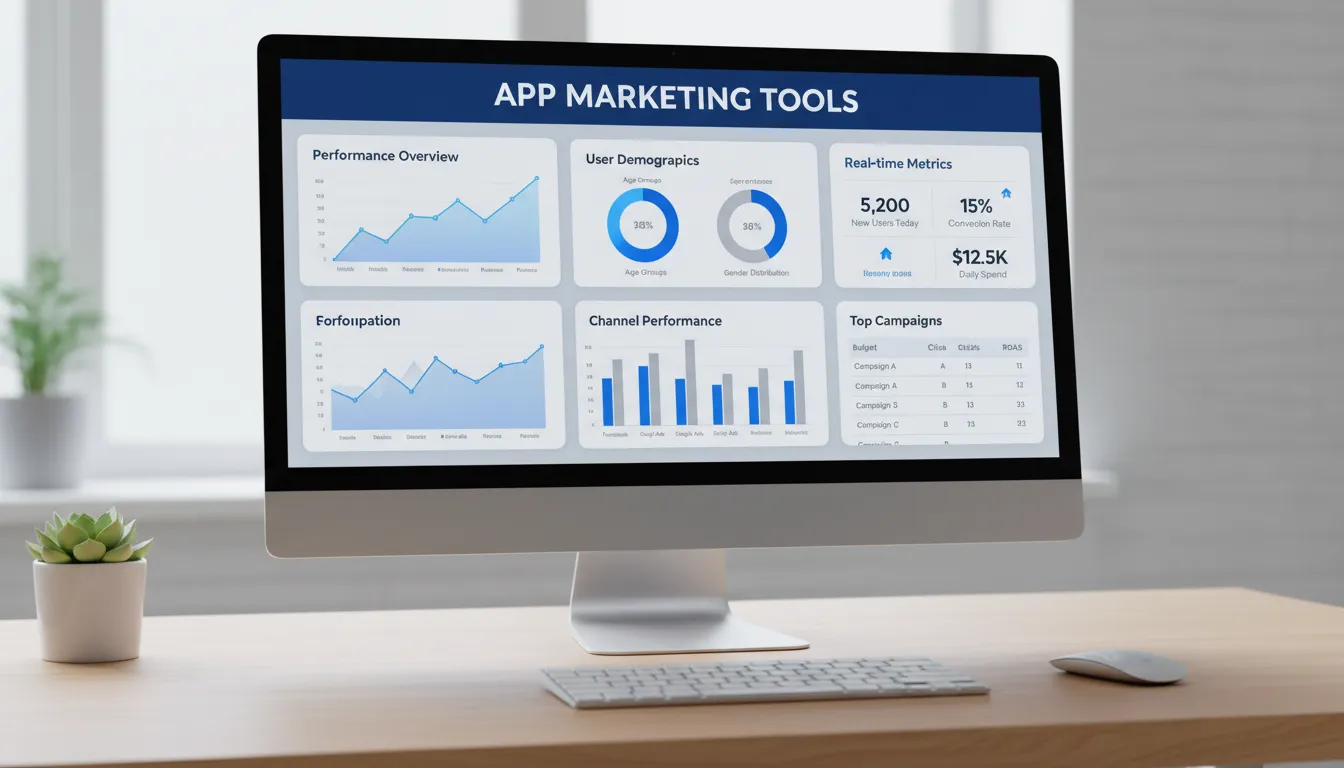
This in-depth guide walks you through every vital stage of mobile app marketing. We break down the core pillars of sustainable growth, including app store optimization (ASO), high-performance paid user acquisition, data-driven retention tactics, influencer strategies, and more. Along the way, you’ll find actionable frameworks and learn how to use the tools of digital marketing that are trusted by leading brands to capture more users, outperform competitors, and boost long-term visibility and engagement in any niche.
Struggling to get users to download your application? Mastering app marketing, mobile, and leveraging the right tools of digital marketing is now essential for app creators, growth marketers, and businesses eager to dominate the app stores and drive record-breaking installations. As millions of apps compete for attention, only those who use the smartest techniques and the most effective tools of digital marketing can consistently win downloads and conversions.
The Core Pillars of Mobile App Growth
Creating a flawless application is just the starting line. Even the most usable app won’t thrive without a robust engine that constantly attracts and retains new users. App growth is no longer just about a single campaign or a marketing “sprint”—it’s about building an integrated ecosystem. This ecosystem touches on discoverability, user acquisition, engagement, reviews, retention, and monetization. Each element works together, and each is powered by the right tools of digital marketing.
When you launch your application, you are in a crowded race with millions of competitors. To stand out, you need to align your product and marketing funnel with real user search intent, trending topics, and valid pain points. Digital marketing tools give you the insight and horsepower you need at each step—whether you’re running a lean startup or managing a Fortune 500 mobile product.
You’ll succeed by building a robust, repeatable process:
- Research top-performing app categories and keywords
- Craft compelling messaging for your core audience
- Launch with a mix of organic and paid strategies
- Monitor data and user sentiment, optimizing every step
- Double down on what’s working, cut what’s not
Why You Need the Best tools of digital marketing for App Growth
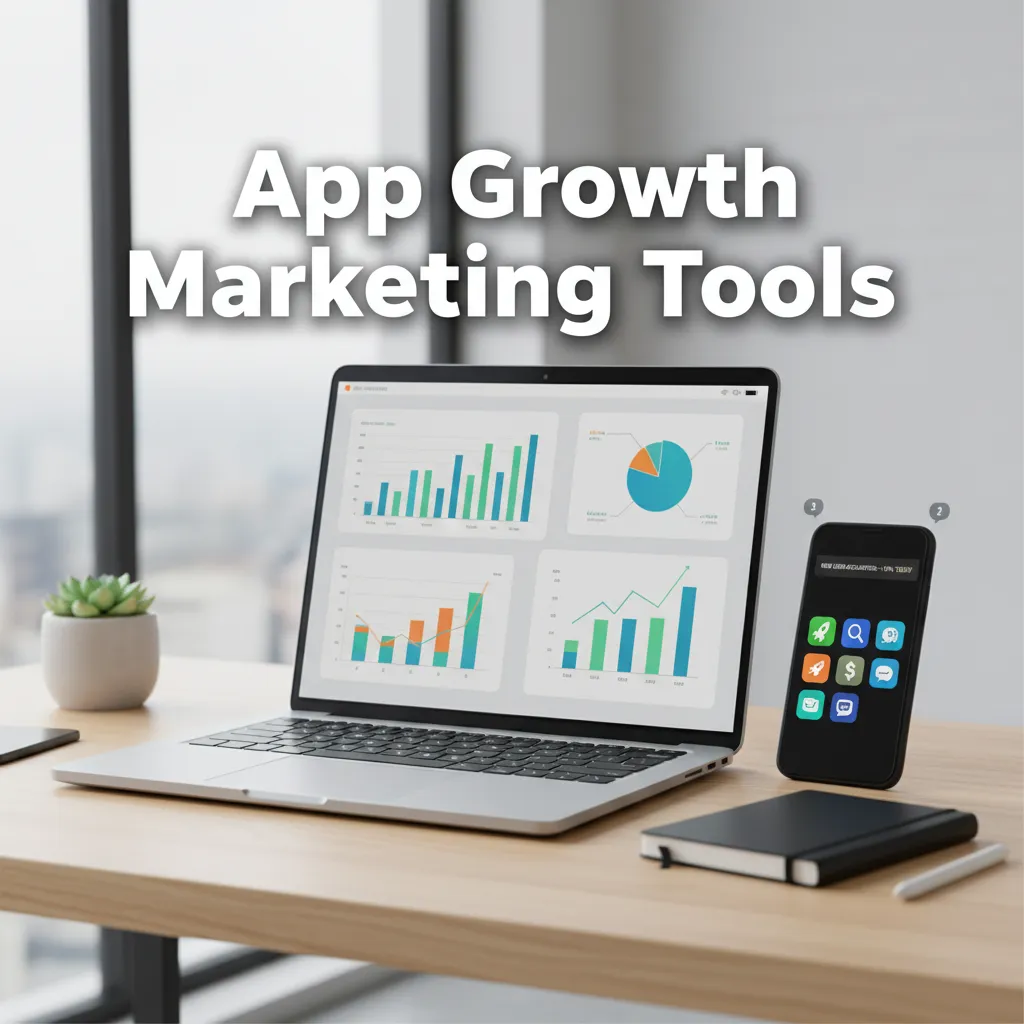
Guesswork is over. In today’s fast-changing mobile ecosystem, every winning marketer relies on data, automation, and analytics. The most successful apps universally integrate powerful tools of digital marketing to analyze the user journey from the ad to install, from first open to power user.
Not sure where your downloads are dropping off? The right analytics platform can pinpoint the exact screens or steps where friction occurs. Unsure which ad creative is most profitable? A/B testing tools allow head-to-head experiments to reveal what truly converts. Want to see which feature your top-paying customers use? Cohort analysis and in-app event tracking provide these answers instantly.
The tools of digital marketing you use become your compass. With mobile attribution tracking, campaign analytics, and behavioral heatmaps, you tune your onboarding, improve retention, and focus your marketing resources for the highest ROI. Some of the top solutions for developing and scaling apps include:
- Appsflyer: Industry-leading attribution and analytics
- Adjust: Advanced app analytics and attribution
- Mixpanel: In-depth user behavior analysis
- Firebase: Unified app development, analytics, and engagement suite
By leveraging such tools of digital marketing, you can run sophisticated campaigns even with limited resources and keep your team focused on what moves the needle.
Mastering App Store Optimization (ASO)
ASO sits at the heart of organic app growth. Most app installs still originate from in-app store searches, and optimizing your listing can create a flood of highly qualified organic users—at zero incremental cost. Here’s your ASO game plan:
- Research Keywords: Use keyword research tools to identify both high-volume and niche-specific terms your audience searches for.
- Compelling Title: Include your core keyword in your app title, but balance readability and brand appeal.
- Persuasive Subtitle & Description: Describe your app’s top benefits and use cases. Use bullet points for readability and include semantic keywords.
- Visual Excellence: Invest in a professional icon and high-resolution screenshots that walk the user through key features. Add an engaging preview video—apps with a video routinely see conversion rates increase by up to 25%.
- Regular Updates: App store algorithms favor apps with frequent updates and bug fixes. Highlight “What’s New” clearly in your update notes.
- Ratings & Reviews: The fastest way to boost credibility. Use in-app prompts strategically to ask for reviews after a positive user experience.
Further ASO reading and best practices are available from the Apple Developer guidelines and Google Play Console.
Implementing Paid User Acquisition
Organic growth is a long game, but app marketers need short-term traction too—especially in the crucial early stages after launch. Paid user acquisition allows you to drive immediate app installs and test new markets quickly. The most effective paid acquisition strategies use the tools of digital marketing to deliver, measure, and optimize:
- Ad Platforms: Facebook, Instagram, TikTok, Google Ads, and Apple Search Ads.
- Targeting: Narrow your audience to specific demographics, devices, interests, behaviors, or lookalike segments.
- Creative Testing: Build diverse ad creatives—static images, animated videos, carousel ads. Test headlines and calls-to-action rigorously.
- Measurement: Track installs, in-app engagement, and downstream revenue to measure true post-install value.
- Retargeting: Use dynamic retargeting to re-engage users who installed but haven’t converted.
Key Tip: Never run blind. The right tools of digital marketing let you compare cost per install (CPI), customer acquisition cost (CAC), retention rates, and lifetime value (LTV) across each channel.
The Power of Influencer Partnerships
Influencer marketing is a golden opportunity—when done correctly. Mobile-first audiences trust social proof, and real people using your app on platforms like YouTube, TikTok, Instagram, and Twitch can trigger a viral wave of downloads.
Effective Influencer Tactics:
- Identify creators aligned with your value proposition and brand identity.
- Seek authentic integrations—let influencers share their honest experience, not just scripted pitches.
- Co-create content: run an influencer challenge, share user stories, or sponsor in-app community events.
- Track redemption codes and download links by influencer to measure ROI accurately.
Pro tip: Brands achieve substantial results by offering influencers exclusive app features, early access, or co-branded experiences. The outreach process is made dramatically easier when you use influencer discovery tools—another benefit of the modern tools of the digital marketing stack.
Engaging and Retaining Your Users

Acquiring users is important, but keeping them is how you build lasting value. Most users abandon an app within a week if their expectations aren’t met. Retention has a direct impact on your app store rankings, monetization potential, and viral growth.
Perfecting the Onboarding Process
The onboarding journey is your first—and often only—chance to get users hooked. Streamline registration. Remove unnecessary fields. Use visuals and short tooltips to guide users through the features that matter most. Let users “taste” value before requiring a signup or purchase commitment.
A/B test your onboarding flows using analytics dashboards. Review user drop-off rates at each step and iterate constantly. Offering a guest mode or a single-tap login (e.g., via Google or Apple) can drastically reduce abandonment.
Strategic Push Notifications
Push notifications offer massive potential for retention when used responsibly. Segment your user base and deliver the right message, at the right time, with the right context:
- Send onboarding tips to new users
- Nudge lapsed users with reminders or exclusive perks
- Personalize offers based on in-app behavior or location
- Celebrate user milestones (e.g., 100th session, first purchase)
Key: Never spam. Overzealous messaging is a top uninstall trigger. Regularly use analytics from your stack of digital marketing tools to monitor opt-out and uninstall rates.
Rewarding Loyalty
Gamification and rewards should be core parts of your retention toolkit. Ideas that work:
- Award points, badges, or unlock exclusive content for actions (e.g., daily logins, sharing, inviting friends)
- Launch “streak” rewards: consecutive use boosts chances of habit formation
- Run contests, leaderboards, or social challenges to encourage engagement
- Offer limited-time in-app offers and seasonal events
Loyalty programs transform users into passionate advocates for your app—fueling word-of-mouth and viral growth. You can manage and analyze these strategies using customer engagement tools (like Braze or Leanplum).
Advanced Strategies to Scale and Monetize

To build a category-defining app brand, deploy a full-stack approach. Beyond ASO and acquisition tactics, leading marketers layer on creative and data-driven strategies:
Content Marketing and SEO
A robust content strategy positions you as an expert in your niche and drives high-intent users to your website or app download page. Examples of effective content marketing in the app space include:
- Blog posts answering common user questions (leveraging LSI and long-tail keywords)
- Step-by-step guides, explainer videos, or user stories highlighting your application’s features
- Industry thought leadership via guest posts on respected platforms like MobileDevMemo or G2 Crowd
Include internal linking to reinforce topical authority. For example, link to the Mobile App Analytics Guide or App Store Optimization Tips for added relevance and user value.
App Store Ads and Advanced Campaigns
Invest in Search Ads (Apple), in-app ads, and cross-promotion. Use your CRM and behavioral segmentation to run personalized promotional pushes. Integrate predictive analytics to dynamically adjust bids and creative variations, ensuring your campaign budgets always flow to the top-performing sources.
User Feedback and Continuous Optimization
Actively solicit user reviews and feedback—not only in-store, but also through in-app surveys and user research interviews. Identify usability bottlenecks fast and prioritize what users value most. Tools like Typeform or UsabilityHub can help.
Analytics-driven insights empower you to evolve your road map. Use funnel analysis, cohort retention reports, and attribution studies to iterate on your product, communications, and user flows for ongoing improvement.
Experimenting With Virality and Social Loops
Tap viral growth by enabling easy sharing, referrals, and social logins within your app. Give existing users a reason to invite friends—perks, unlockables, or shared experiences. Use referral tracking tools to fine-tune campaigns for maximum reach (e.g., Branch, Branch.io).
Comparison Table: Top Channels for App Growth
|
Marketing Channel |
Cost Level |
Time to See Results |
Best Used For |
|---|---|---|---|
|
App Store Optimization |
Low |
Slow (Months) |
Baseline organic traffic & visibility |
|
Paid Social Ads |
High |
Fast (Days) |
Rapid audience scaling, targeted acquisition |
|
Influencer Marketing |
Medium to High |
Medium (Weeks) |
Burst campaigns, trust-building |
|
Content SEO |
Low to Medium |
Slow (Months) |
Evergreen discovery, authority, education |
|
Viral Loops/Referrals |
Low |
Medium (Weeks) |
Exponential growth via user-to-user recommendations |
Pro Tips for Scaling Your App
Supercharge your app marketing with these expert strategies:
- Localization Matters: As you expand internationally, localize not only store listings but also in-app content, customer service, and support documentation.
- A/B Test Everything: Headlines, screenshots, CTAs, and even onboarding flows—continual testing is the best way to maximize conversion rate.
- Leverage User Segmentation: Understand and segment your audience by demographics, behavior, and value. Deliver personalized messaging and experiences to each segment.
- Monitor the Competition: Use app intelligence tools to track competitor launches, feature updates, and campaign strategies. Quickly identify new trends or threats.
- App Security and Privacy: Users trust apps that are secure. Review your security measures and clearly communicate data privacy to avoid churn and to boost trust.
For more technical deep dives and up-to-date trends, check resources like the Mobile Growth Stack and Product Analytics 101.
Common Mistakes to Avoid in App Marketing
Even seasoned marketers make these missteps. Avoid them to save dollars, time, and reputation:
- Rushing to launch without a validated “minimum lovable product” or user testing
- Neglecting metadata and visuals in ASO
- Overlooking critical app updates after collecting early feedback
- Relying solely on paid ads instead of building a content and community marketing flywheel
- Failing to integrate analytics and event tracking from day one
- Overpromising in store listings or ads (leading to bad reviews and churn)
- Forgetting to A/B test core screens and key journeys—assumptions kill growth
Learn how leading apps have avoided these pitfalls by reading real-world case studies at AppAgent.
Building a Sustainable Growth Engine

True growth isn’t about one big campaign—it’s about building a flywheel. Follow this cycle:
- Attract new users with ASO, content, paid, and influencer channels
- Engage users with personalized, habit-forming journeys and gamified loops
- Retain users by delivering consistent value, new features, and support
- Measure every step using the best tools of digital marketing
- Optimize—keep what works, pivot away from what doesn’t
Don’t forget to invest in community-building and customer support. Respond promptly to questions and feedback in app stores, on social networks, and via support tickets. Build a base of raving fans who evangelize your brand.
Use integrated marketing platforms to connect all your acquisition, engagement, and retention efforts. The most successful teams use dashboards that bring together ASO metrics, ad spend, LTV, churn, and engagement—enabling daily optimizations and fresh creative.
Conclusion
The path to app marketing mastery blends creativity, analytics, and relentless execution. By optimizing your listing, running sharply targeted campaigns, collaborating with influencers, building genuine user relationships, and prioritizing retention, you drive continuous app installations—even in hyper-competitive categories.
Keep the best tools of digital marketing at the core of your approach to benefit from automation, insight, and scalability. Start implementing these actions today—your next-level app growth story begins now. Want to claim your spot at the top of the charts? Don’t wait. Act on these strategies and watch your installations soar.
Frequently Asked Questions
What is App Store Optimization (ASO)?
ASO is the process of fine-tuning your app’s app store listing—title, description, keywords, visuals, and reviews—to boost visibility and organic downloads. Top apps update their listings regularly based on keyword trends and competitive changes.
How much should I spend on paid user acquisition?
Start with a modest daily budget to test channels and creatives. Use tools of digital marketing to analyze CPI, CAC, and return on ad spend (ROAS). Only scale campaigns where lifetime value exceeds acquisition cost.
Which tools of digital marketing are essential for app growth?
Key solutions include attribution providers (Appsflyer, Adjust), engagement analytics (Mixpanel, Amplitude), ASO platforms (Sensor Tower, AppTweak), marketing automation (Braze, Clevertap), and influencer platforms (Upfluence, AspireIQ).
How can I improve my app retention rate?
Focus on a seamless onboarding flow, relevant push notifications, in-app messaging, gamified rewards, and frequent updates. Always use data to drive product iterations based on user feedback.
Do I need to localize my app?
Yes. Localizing app store assets and in-app content dramatically increases reach and revenue potential, especially in non-English-speaking markets.
How often should I update my app?
Aim for at least monthly updates for bug fixes, feature improvements, and performance enhancements. Highlight updates in “What’s New” to encourage return traffic.
Why are my users deleting the app after one day?
Possible reasons: confusing onboarding, mandatory sign-up before value delivery, annoying ads, crashes, or bugs. Deep-dive into analytics to spot and patch the biggest drop-off points.
Is influencer marketing effective for mobile apps?
Absolutely! Influencers help you tap authentic communities and rapidly build trust, accelerating organic installs, especially for lifestyle, gaming, and productivity apps.
How do I get more positive reviews?
Ask for reviews after users complete a meaningful action or milestone. Never prompt during moments of frustration or high cognitive load.
Can I succeed without a marketing budget?
Organic growth through ASO, community initiatives, referral programs, and content marketing is possible—but far slower. The right tools of digital marketing can help you accelerate and sustain scalable growth, even on a tight budget.


Leave a Reply